RV Gear ›
How to Connect a TV to an RV Antenna
by Jake Mercer
Picture a campsite deep in Wyoming, miles from any cellular tower, with a family settling in for the evening after a long drive through open country. The RV's built-in antenna sits mounted on the roof, perfectly positioned to capture broadcast signals, while the television stays dark because nobody made the connection. Learning how to hook up TV to RV antenna is one of those foundational skills that separates comfortable travelers from people perpetually frustrated by dark screens, and for anyone serious about life on the road, it belongs in the essential knowledge stack alongside every other critical piece of RV gear.

Contents
When RV Antenna TV Makes the Most Sense
Remote Campgrounds With No Cellular Coverage
Over-the-air (OTA) television via a rooftop RV antenna performs best precisely where streaming services fail — specifically in rural campgrounds, national forest sites, and boondocking locations well beyond the reach of cellular infrastructure. In these environments, a properly connected antenna pulls in local network affiliates, PBS channels, and emergency broadcast alerts with zero subscription cost and no data usage. The television antenna technology behind these rooftop units has improved considerably over the past decade, with modern amplified designs capturing broadcast signals from towers up to 60 miles distant under favorable atmospheric conditions, making them far more capable than their predecessors from the analog era.
Full-Time and Extended-Stay RVers
Full-time RV residents represent the strongest use case for antenna television, since streaming subscriptions accumulate rapidly across months or years of continuous travel. As examined in the full breakdown of what it costs to live in an RV full time, entertainment expenses form a meaningful slice of the monthly budget, and eliminating streaming subscriptions through reliable OTA reception produces tangible savings. Seasonal campers staying in one location for several weeks also benefit significantly, since a single antenna scan at arrival delivers a stable channel lineup for the entire stay without recurring costs or data consumption worries.
How To Hook Up TV to RV Antenna: The Two Core Methods
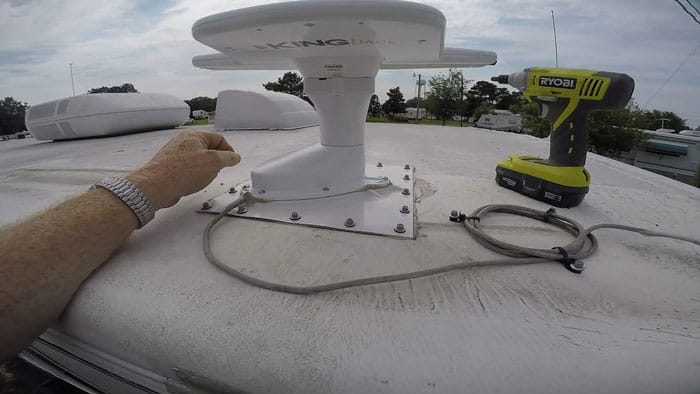
Method 1: Using the Existing Coaxial Port
Most recreational vehicles manufactured after 2005 include a factory-installed coaxial cable system that runs from the rooftop antenna down through the RV wall to one or more coaxial wall ports inside the living area. Connecting the television requires nothing more than a standard RG6 coaxial cable running from the wall port to the TV's antenna input, labeled "ANT IN" or "RF IN" on the rear panel. Once connected, the television's channel scan function — typically located under Settings > Channel Setup > Air/Antenna — searches available broadcast frequencies and stores all detected stations in memory. This method costs nothing beyond the cable itself and works reliably when the RV's built-in antenna remains in good working condition and is properly elevated or rotated toward the strongest nearby signal source.
Method 2: Installing a New Amplified Antenna
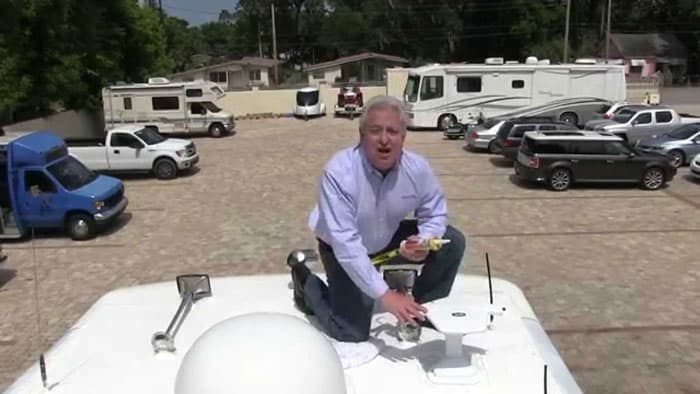
Rigs with aging or damaged factory antennas, or those that need improved reception range, benefit considerably from an aftermarket amplified antenna such as the Winegard Sensar or King Jack series. Installation involves mounting the new antenna on the roof, routing a fresh RG6 coaxial cable through an existing cable entry grommet, connecting a signal amplifier (usually mounted inside a cabinet or storage area near the television), and then running a short jumper cable from the amplifier output to the TV's antenna input. The amplifier itself requires a 12V DC power source, typically tapped from a nearby fused circuit using an add-a-fuse connector available at any auto parts store. This process is manageable for anyone comfortable with basic electrical connections, and the reward is noticeably stronger channel acquisition in fringe signal areas where factory antennas fall short.
OTA Antenna vs. Streaming vs. Satellite: Real Trade-offs
Signal Reliability by Setup Type
Each entertainment method carries specific strengths and failure modes that vary with geography, campsite type, and travel patterns. OTA antenna television delivers free, reliable content wherever broadcast towers exist but offers no on-demand capability. Streaming services provide extensive libraries but require consistent cellular or WiFi data connectivity, which the comprehensive guide to getting WiFi in an RV covers in practical depth. Satellite systems like King Dome or Winegard ConnecT offer wide geographic coverage but carry the highest equipment and subscription costs of any available option. The table below provides a direct comparison across the criteria that matter most to RV travelers making this decision.
| Method | Monthly Cost | Equipment Cost | Works Off-Grid | On-Demand Content | Setup Complexity |
|---|---|---|---|---|---|
| OTA Antenna | $0 | $0–$150 | Yes (near towers) | No | Low |
| Cellular Streaming | $30–$120+ | $0–$50 (hotspot) | No | Yes | Very Low |
| RV Park WiFi | Included or $5–$15 | $0–$80 (booster) | No | Yes | Low |
| Satellite Dish | $30–$130+ | $300–$1,000+ | Yes | Limited | High |
| Starlink RV | $150 | $599 | Yes (portable) | Yes | Medium |
Getting the Best Signal: Insider Tips

Antenna Positioning Matters More Than Amplification
Before investing in a signal amplifier, the correct first step is optimizing antenna position and physical placement. Most roof-mounted RV antennas are omnidirectional, meaning rotation is unnecessary, but the antenna must be raised to its full extended height rather than left stowed in the travel position. Parking the RV on elevated ground rather than in low-lying areas surrounded by dense trees consistently improves reception more reliably than any amplifier upgrade available at retail. The FCC's DTV reception maps provide free guidance on which broadcast towers serve any given location, allowing travelers to orient their setup and set accurate channel scan expectations before arrival at any new campsite.
Never run a channel scan while the antenna remains in the travel-stowed position — the television will store ghost channels or nothing at all, and a full rescan from a stationary, antenna-raised position will be required to correct it.
Amplifier Placement and Cable Quality
When amplification is genuinely needed, placing the signal amplifier directly at the antenna feed point — rather than near the television — produces measurably better results, since amplifying a weak signal before cable losses occur is more effective than boosting a degraded signal at the end of a long coaxial run. Cable quality plays an underappreciated role in overall system performance, and replacing old RG59 coaxial runs with RG6 quad-shield cable reduces signal degradation across longer cable runs inside the RV. Connections showing corrosion, physical damage, or loose fittings at wall ports and inline splitters deserve attention before any amplifier purchase, since a single compromised connector introduces more loss than even a quality amplifier can recover.
What the Setup Actually Costs
Budget Tiers by Setup Type
The financial reality of RV antenna television is clear: the entry-level setup costs almost nothing, while premium installations with new hardware remain far cheaper than any satellite alternative. For an RV with a functioning factory antenna and coaxial wall port already in place, the only expense is an RG6 coaxial cable, available at hardware stores for under $15. An aftermarket amplified antenna such as the Winegard Sensar Pro runs between $60 and $100, while professional-grade flat amplified antennas like the King Jack series retail around $90 to $130. Adding a dedicated signal preamplifier (the Winegard LNA-200 is the standard recommendation among experienced installers) adds another $25 to $40. Total investment for a fully upgraded, high-performance OTA antenna system lands well under $200, making it one of the strongest value propositions in the broader category of practical RV technology upgrades. For RVers tracking overall power draw alongside the new antenna hardware, the RV lithium battery vs AGM comparison provides useful context for planning the electrical load budget.
Building a Reliable Long-Term Entertainment System
Antenna Upgrades Worth the Investment
For RVers who travel frequently and spend significant time in rural or fringe-signal areas, upgrading the factory antenna to a premium omnidirectional amplified model is money well spent without qualification. The Winegard Rayzar Z1 and King Jack HD represent the current performance ceiling for roof-mounted RV antennas, with claimed reception ranges of 55 to 65 miles from broadcast towers under clear-sky conditions. Both units install in essentially the same roof footprint as most factory antennas, making replacement straightforward for anyone comfortable with basic roof sealing work. The investment becomes most defensible for full-timers who have already optimized other systems and are looking to reduce ongoing monthly costs across their entire setup.
Combining OTA With WiFi and Streaming
The most practical long-term entertainment strategy for serious RV travelers combines OTA antenna reception with a selective streaming service, using the antenna for live news, sports, and network programming while streaming handles on-demand entertainment during periods with adequate data connectivity. A smart television with built-in streaming apps simplifies this arrangement considerably, since users switch between antenna input and streaming apps through a single remote without any additional hardware or switching boxes. This hybrid approach also provides useful redundancy — when cellular data runs out or park WiFi proves unreliable, the antenna continues delivering live content without interruption, which aligns with the broader planning philosophy that experienced full-timers apply across systems like navigation and campsite awareness, as covered in detail in the RV GPS decision guide.
Frequently Asked Questions
Does every RV television have a coaxial input for an antenna connection?
Most televisions designed for or commonly used in RVs include a standard coaxial (RF) antenna input on the rear panel, typically labeled "ANT IN" or "RF IN." However, some compact 12V RV-specific televisions omit this input in favor of HDMI-only connections, in which case an external digital tuner box with a coaxial input and HDMI output can restore OTA antenna functionality for under $30.
Why does the TV show "No Signal" after running a channel scan via the RV antenna?
The most common cause is running the scan while the antenna remains in the stowed travel position rather than fully raised or extended. Other frequent culprits include a loose or corroded coaxial connection at the wall port, a blown amplifier fuse, or a campsite location that is simply too far from any active broadcast tower. Raising the antenna fully, checking all cable connections, and verifying power to any installed amplifier resolves the issue in the majority of cases.
Can a signal amplifier be added to an existing RV antenna system without replacing the antenna itself?
An inline signal amplifier can be added to any existing coaxial system by inserting it between the antenna cable and the television input. The Winegard LNA-200 and Channel Master CM-7777HD are proven options that install without any roof work, requiring only a coaxial splitter connection and a 12V or USB power source. This upgrade is the recommended first step before committing to a full antenna replacement.
How often should the channel scan be re-run when traveling to new locations?
A fresh channel scan should be performed at each new campsite or region, since broadcast tower coverage varies significantly by geography and the stored channel list from the previous location will not reflect what is available at the new one. Running a scan takes approximately two to four minutes on most modern televisions and ensures the strongest and most complete channel lineup for each specific location.
Next Steps
- Locate the coaxial wall port inside the RV's living area, connect a short RG6 cable to the TV's antenna input, raise the rooftop antenna to its full extended position, and run a full channel scan under the TV's settings menu to establish the baseline of what the existing factory system can receive.
- Inspect all coaxial cable connections along the signal path — at the wall port, any inline splitters, and the TV input — and replace any connector showing corrosion, physical damage, or a loose fit before considering any amplifier or antenna upgrade.
- Use the FCC's free DTV reception map tool to identify which broadcast towers serve the most frequently visited campsites, and use this information to set realistic expectations and determine whether an amplifier or antenna upgrade is actually warranted for the typical travel route.
- If signal quality remains insufficient after optimizing position and connections, add a Winegard LNA-200 preamplifier at the antenna feed point as the first hardware upgrade, since this single change delivers the greatest per-dollar improvement available before committing to a full antenna replacement.
- Plan a hybrid entertainment strategy by pairing the OTA antenna setup with a single streaming service subscription for on-demand content, ensuring continuous entertainment capability regardless of cellular coverage or park WiFi availability at any campsite.


About Jake Mercer
Jake Mercer spent twelve years behind the wheel as a long-haul trucker, covering routes across the continental United States and logging well over a million miles. That career gave him an unusually thorough education in CB radio equipment — he has tested base station antennas, magnetic mounts, coax cables, and handheld units in real-world conditions where reliable communication actually matters. After leaving trucking, Jake transitioned to full-time RV travel and has since put hundreds of RV accessories through their paces across national parks, boondocking sites, and full-hookup campgrounds from Montana to Florida. At PalmGear, he covers RV gear and accessories, CB radios, shortwave receivers, and handheld radio equipment.
You can get FREE Gifts. Or latest Free phones here.
Disable Ad block to reveal all the info. Once done, hit a button below